Pork belly & fried eggs
Poitrine de porc et oeuf au plat

Ingredients
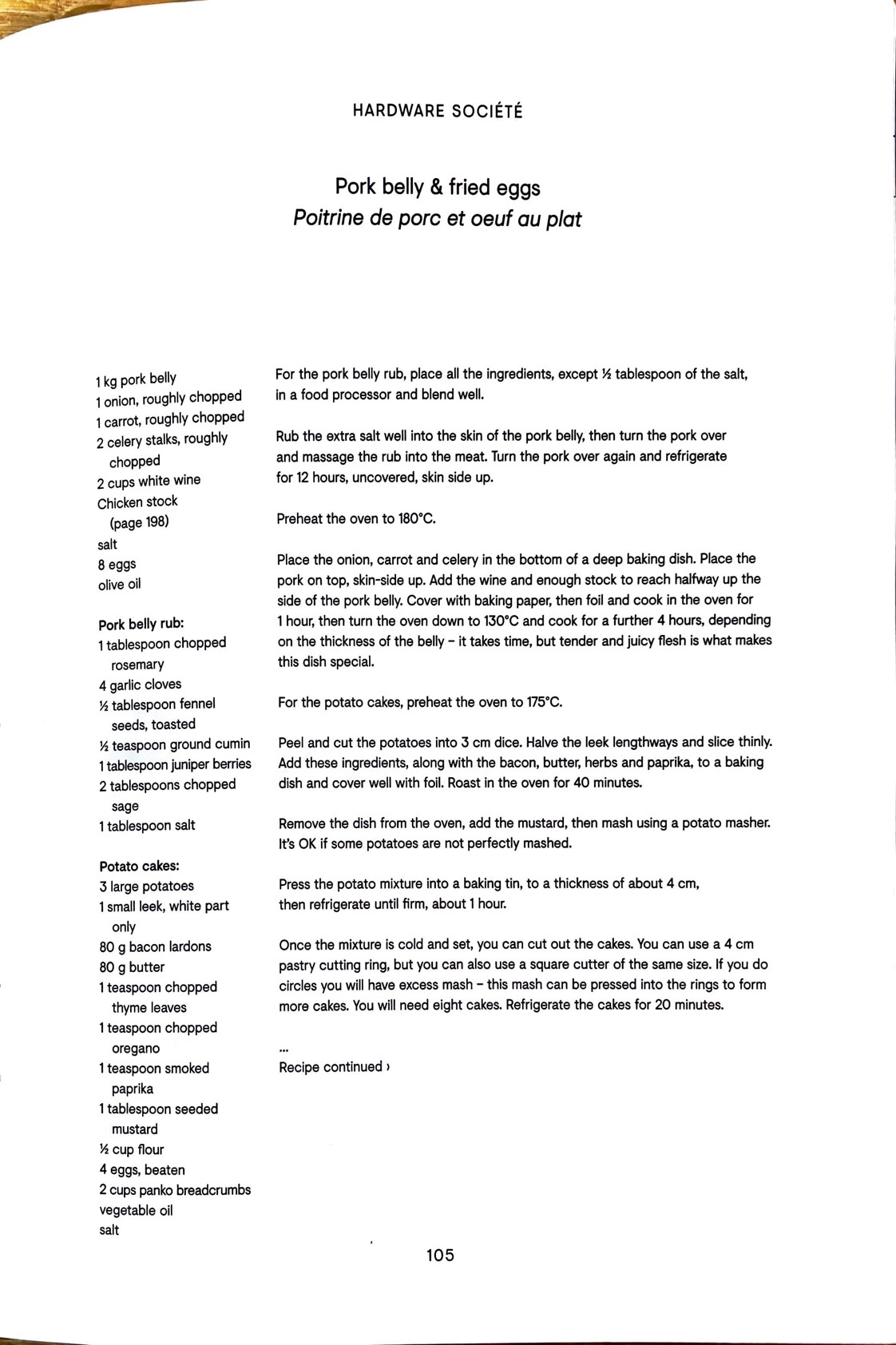
1 kg pork belly 1 onion, roughly chopped 1 carrot, roughly chopped 2 celery stalks, roughly chopped 2 cups white wine Chicken stock (page 198) salt 8 eggs olive oil Pork belly rub: 1 tablespoon chopped rosemary 4 garlic cloves ½ tablespoon fennel seeds, toasted ½ teaspoon ground cumin 1 tablespoon juniper berries 2 tablespoons chopped sage 1 tablespoon salt Potato cakes: 3 large potatoes 1 small leek, white part only 80 g bacon lardons 80 g butter 1 teaspoon chopped thyme leaves 1 teaspoon chopped oregano 1 teaspoon smoked paprika 1 tablespoon seeded mustard ½ cup flour 4 eggs, beaten 2 cups panko breadcrumbs vegetable oil salt To serve: 4 pieces grain bread, toasted 4 tablespoons Beetroot chutney (page 202) a few sprigs of watercress Serves 4
Method
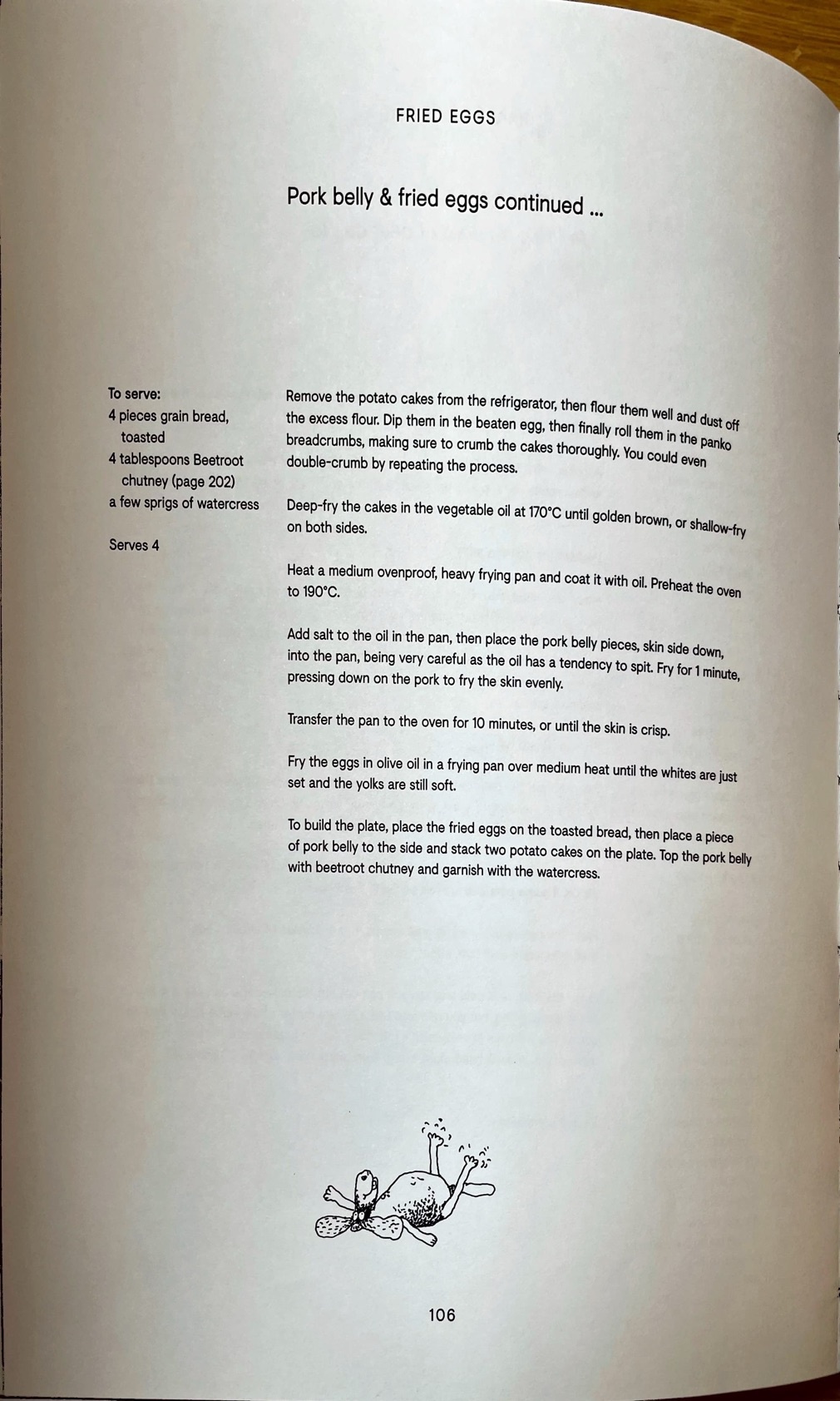
For the pork belly rub, place all the ingredients, except ½ tablespoon of the salt, in a food processor and blend well. Rub the extra salt well into the skin of the pork belly, then turn the pork over and massage the rub into the meat. Turn the pork over again and refrigerate for 12 hours, uncovered, skin side up. Preheat the oven to 180°C. Place the onion, carrot and celery in the bottom of a deep baking dish. Place the pork on top, skin-side up. Add the wine and enough stock to reach halfway up the side of the pork belly. Cover with baking paper, then foil and cook in the oven for 1 hour, then turn the oven down to 130°C and cook for a further 4 hours, depending on the thickness of the belly – it takes time, but tender and juicy flesh is what makes this dish special. For the potato cakes, preheat the oven to 175°C. Peel and cut the potatoes into 3 cm dice. Halve the leek lengthways and slice thinly. Add these ingredients, along with the bacon, butter, herbs and paprika, to a baking dish and cover well with foil. Roast in the oven for 40 minutes. Remove the dish from the oven, add the mustard, then mash using a potato masher. It’s OK if some potatoes are not perfectly mashed. Press the potato mixture into a baking tin, to a thickness of about 4 cm, then refrigerate until firm, about 1 hour. Once the mixture is cold and set, you can cut out the cakes. You can use a 4 cm pastry cutting ring, but you can also use a square cutter of the same size. If you do circles you will have excess mash – this mash can be pressed into the rings to form more cakes. You will need eight cakes. Refrigerate the cakes for 20 minutes. Remove the potato cakes from the refrigerator, then flour them well and dust off the excess flour. Dip them in the beaten egg, then finally roll them in the panko breadcrumbs, making sure to crumb the cakes thoroughly. You could even double-crumb by repeating the process. Deep-fry the cakes in the vegetable oil at 170°C until golden brown, or shallow-fry on both sides. Heat a medium ovenproof, heavy frying pan and coat it with oil. Preheat the oven to 190°C. Add salt to the oil in the pan, then place the pork belly pieces, skin side down, into the pan, being very careful as the oil has a tendency to spit. Fry for 1 minute, pressing down on the pork to fry the skin evenly. Transfer the pan to the oven for 10 minutes, or until the skin is crisp. Fry the eggs in olive oil in a frying pan over medium heat until the whites are just set and the yolks are still soft. To build the plate, place the fried eggs on the toasted bread, then place a piece of pork belly to the side and stack two potato cakes on the plate. Top the pork belly with beetroot chutney and garnish with the watercress.
Candidate Images