Rye bread
Makes 2 loaves
Ingredients
For the rye bread sourdough 10g sourdough starter 520ml water 520g rye flour For the rye bread dough 600g cracked rye 280g rye flour 42g salt 1.05L water 80g pearl barley 70g toasted malt flour 800g rye sourdough 50g butter 80g flaxseeds 80g sunflower seeds 80g pumpkin seeds
Method
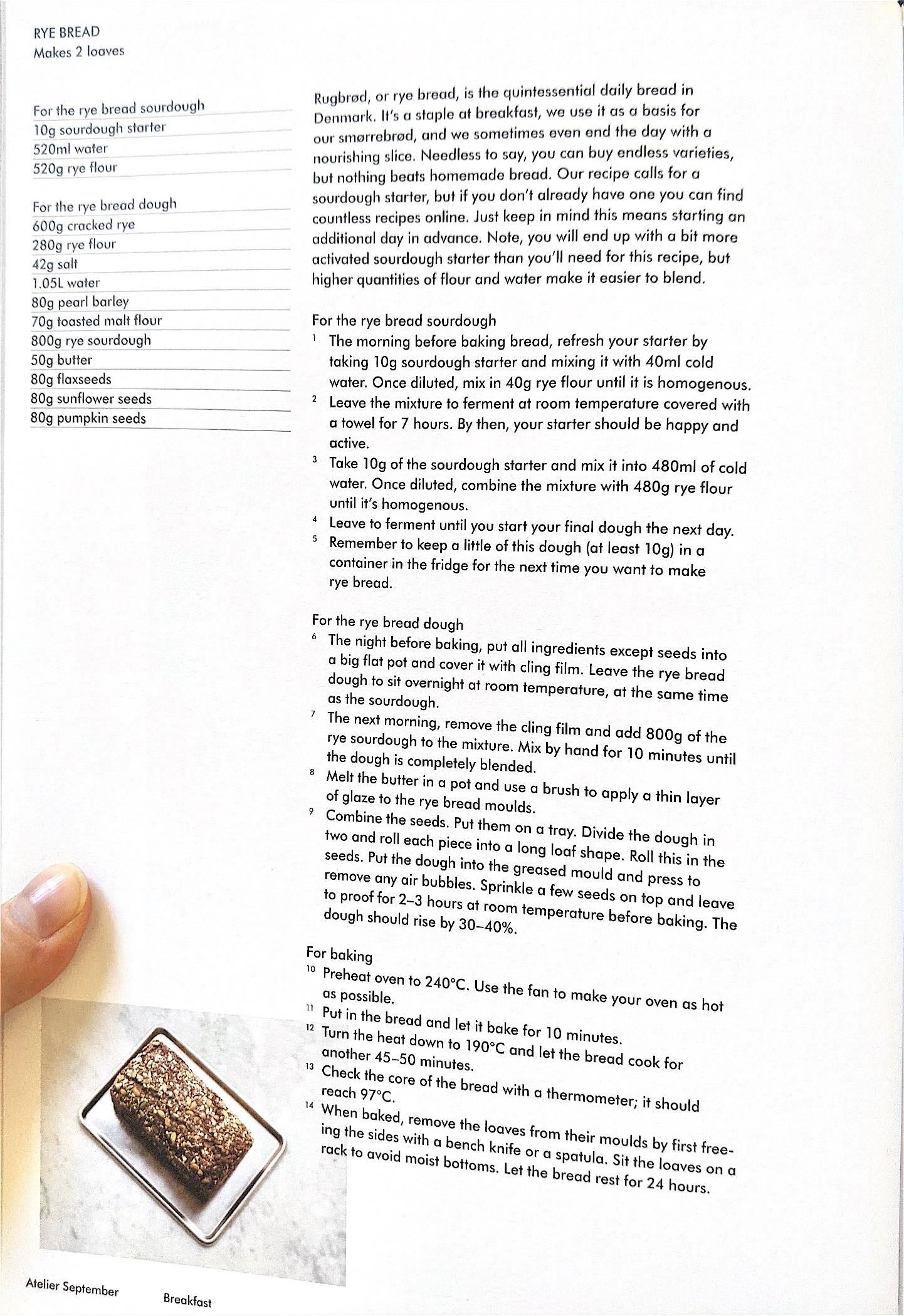
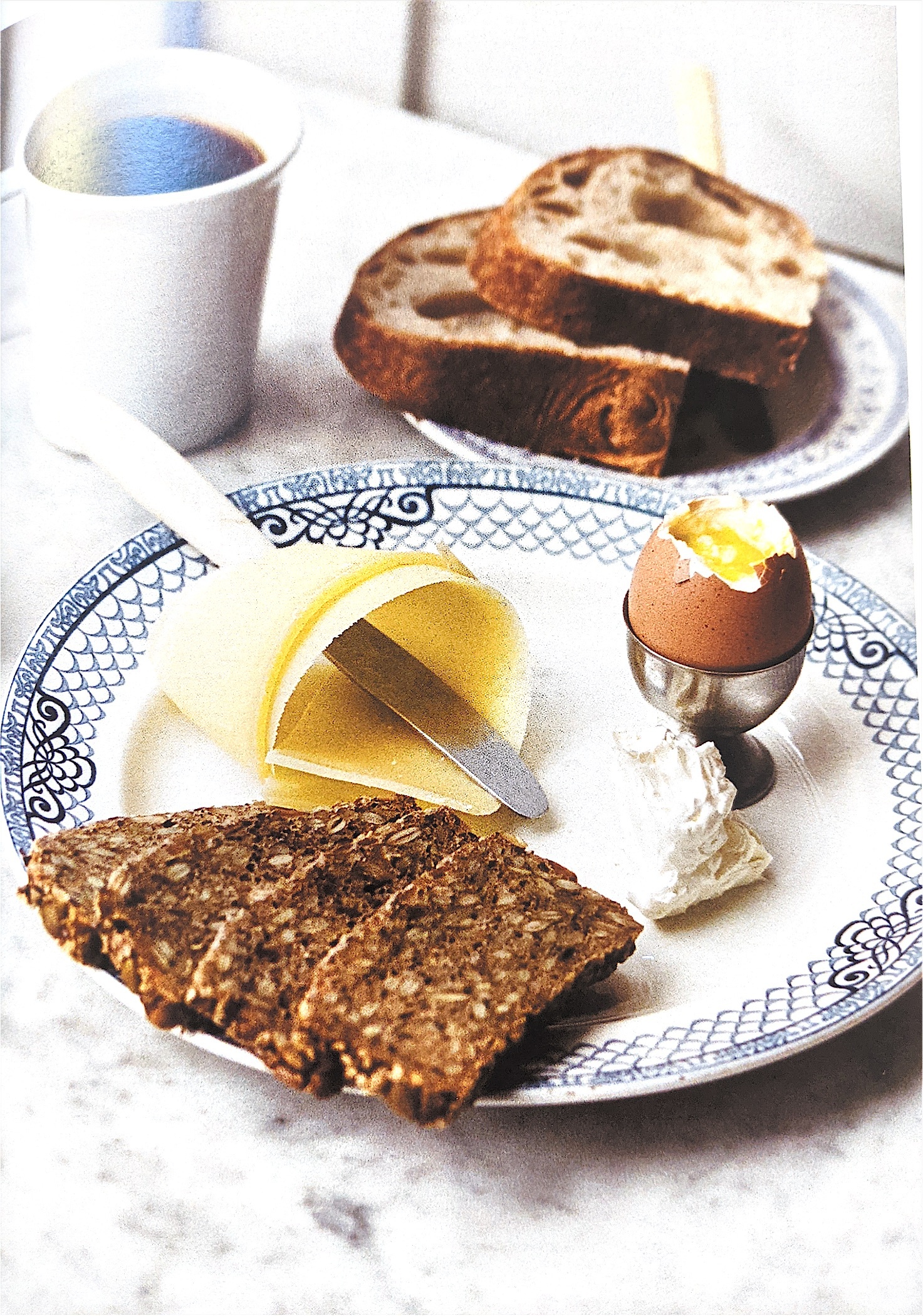
Rugbrød, or rye bread, is the quintessential daily bread in Denmark. It’s a staple at breakfast, we use it as a basis for our smørrebrød, and we sometimes even end the day with a nourishing slice. Needless to say, you can buy endless varieties, but nothing beats homemade bread. Our recipe calls for a sourdough starter, but if you don’t already have one you can find countless recipes online. Just keep in mind this means starting an additional day in advance. Note, you will end up with a bit more activated sourdough starter than you’ll need for this recipe, but higher quantities of flour and water make it easier to blend. For the rye bread sourdough 1 The morning before baking bread, refresh your starter by taking 10g sourdough starter and mixing it with 40ml cold water. Once diluted, mix in 40g rye flour until it is homogenous. 2 Leave the mixture to ferment at room temperature covered with a towel for 7 hours. By then, your starter should be happy and active. 3 Take 10g of the sourdough starter and mix it into 480ml of cold water. Once diluted, combine the mixture with 480g rye flour until it’s homogenous. 4 Leave to ferment until you start your final dough the next day. 5 Remember to keep a little of this dough (at least 10g) in a container in the fridge for the next time you want to make rye bread. For the rye bread dough 6 The night before baking, put all ingredients except seeds into a big flat pot and cover it with cling film. Leave the rye bread dough to sit overnight at room temperature, at the same time as the sourdough. 7 The next morning, remove the cling film and add 800g of the rye sourdough to the mixture. Mix by hand for 10 minutes until the dough is completely blended. 8 Melt the butter in a pot and use a brush to apply a thin layer of glaze to the rye bread moulds. 9 Combine the seeds. Put them on a tray. Divide the dough in two and roll each piece into a long loaf shape. Roll this in the seeds. Put the dough into the greased mould and press to remove any air bubbles. Sprinkle a few seeds on top and leave to proof for 2–3 hours at room temperature before baking. The dough should rise by 30–40%. For baking 10 Preheat oven to 240°C. Use the fan to make your oven as hot as possible. 11 Put in the bread and let it bake for 10 minutes. 12 Turn the heat down to 190°C and let the bread cook for another 45–50 minutes. 13 Check the core of the bread with a thermometer; it should reach 97°C. 14 When baked, remove the loaves from their moulds by first freeing the sides with a bench knife or a spatula. Sit the loaves on a rack to avoid moist bottoms. Let the bread rest for 24 hours.
Candidate Images